

About
About Me
 I’ve had several major pivot points in my life.
The first was when I went to therapy for the first time in my 20s. I didn’t even know what therapy was back then, and the experience changed the course of my future.
Following that new course took forever! I had to go back to school to take the prerequisites that weren’t part of my business degree, and then it took me another four years to finish my Master’s Degree in Counseling.
Then I divorced and shelved the whole career change because I didn’t have the emotional energy to handle two significant life changes at the same time. A decade passed before I was finally thrown back into my career change. This event upended life as my family knew it. My mom was in a terrible car accident, and she didn’t recover. I vividly remember standing with a counselor at the Hospice and hearing a clear voice in my head: “There are no guarantees. If you truly want to change careers, do it now.” I want to tell you it was easy-peasy and Voila, everything changed! In truth, it was an agonizing process that moved like frozen molasses!
 Creating an anti-depressant lifestyle…
I guess there are naturally happy people, and if I was one of them, I doubt I would’ve become a therapist. I wouldn’t have ever searched for what happiness really means to me. I tend to look for meaning, engagement, and vitality over happy.
I’m not entirely sure what it means to be happy, but I know that as soon as someone asks the question, “Are you happy?” all happiness runs for the nearest exit! For me, happiness is fleeting, but curiosity, meaning, and commitment to my values endure even in the hardest of times.
But am I fascinated? Hell, yeah! I’m fascinated and curious all the time, and I love knowing there will always be new things to learn about myself, others, and the world in which we live.
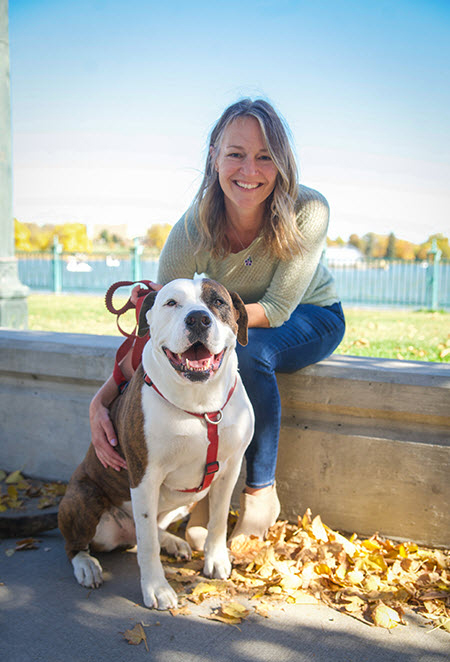
I’ve had to work at finding joy and building, over the years, what I think of as an anti-depressant lifestyle. For me, this means tons of time outside adventuring with my dog (he never met a dumpster he didn’t like), cake and ice cream, lots of sleep, and carefully balancing time between my partner and time alone with my books.
Keeping myself sane and balanced takes quite a bit of work, and I’ve had to accept that I’m a little high maintenance as highly sensitive people tend to be.
Starting my practice was one of several major pivot points.
I was reading a book on cognitive therapy for ADHD and stumbled on the concept of a “pivot point.” I’ve always been fascinated with processes, initially in the corporate world. I learned how to build a system of technology and human behaviors that work effectively to get a job done efficiently. This interest in being effective has transferred over into how I understand human change and growth.
Behavioral analysis is nothing new, but the idea of a pivot point highlights the way we can break a process down (thoughts, feelings, and behaviors) to locate key places in a sequence of events where we can take a different approach and create a new and improved outcome.
This concept of a pivot point was a revelation for me, and it helped me learn to break my behaviors down into individual components and experiment with change.
When it came time to create a business name, I knew Pivot Point was it.
Licensure and Education
I earned my Bachelor’s degree in Decision & Information Systems from University of Maryland, College Park in 1999. A few years later, I returned to school to complete undergraduate coursework in Psychology in order to be able to apply to Masters in Counseling programs. In 2010, I earned my Master’s degree in Counseling from University of North Carolina at Charlotte.
Credentialed by the State of Colorado, I hold licenses as a Licensed Professional Counselor (LPC.0017546) and a Certified Addictions Specialist (ACC.0021004).
Find center and move forward – i am a depth therapist, I love helping people reclaim their inner spark, sense of energy and interest in life again – the spark is in you, will never die, but it can be covered over with masks and defenses and pretense and all the ways we try to be good enough so we can feel loved and accepted – only it will never feel real if the love we get is based on a performance. Quick fix – we can have a couple of sessions and i can make some recommendations about how we might proceed or how you might proceed with someone else or something else. But generally, I am not a person that believes I have your answers – therapy is a relationship and a collaboration – we both need to bring our experience and expertise and curiosity to make it work – it’s both a discovery and a construction (see Stephen Mitchell either intro or first chapter)
If you’re intrigued and hopeful about learning to decipher your inner map and excited about finding places in your life where you can make real change, I hope you’ll call me for a free consultation.